
Life, Death and Art
Australian Artist Clarice Beckett and Losing a Friend

"Death is not extinguishing the light; it is only putting out the lamp because the dawn has come."
— Rabindranath Tagore
"I shall think of you
Whenever I am most happy, whenever I am Most sad, whenever I see a beautiful thing.
You are a burning lamp to me, a flame
The wind cannot blow out, and I shall hold you High in my hand against whatever darkness."
— Edna St. Vincent Millay (Collected Poems)
“Live not for Battles Won.
Live not for The-End-of-the-Song.
Live in the along.”
― Gwendolyn Brooks, Report from Part One

Well, I was going to write about our first pub visit on Thursday, then Friday happened and. . . I’ve decided to hold the Bierhalle tale so I can do a comparison with next week’s pub meal.
Friday morning I got a call that I’d been half expecting, but hoped to avoid. I am in a weekly Zoom group with several other women. We’ve gotten together every week for the last couple of years, although I am the newcomer - the rest met for a long time before I was lucky enough to be invited to participate.
Our common link? An interest in Lynne McTaggart’s book The Power of Eight: Harnessing the Miraculous Energies of a Small Group to Heal Others, Your Life and the World. Some weeks we’d also discuss the latest books or podcasts by Gregg Braden, Joe Dispenza, Bruce Lipton and other positive thinkers.
In my experience, it’s rare to find a group of people who lift each other up and provide constant encouragement, humor and wisdom. As you’ve probably guessed, we lost one of our number, finding out by searching for her obituary after she missed several meetings and didn’t respond to texts or emails.
I’d only met her once in person - we had lunch four years ago - but she made quite the impression. Twenty years older than I, she stunned with the force of her personality, wit and curiosity. And good gosh, the woman had style out the wazoo. I will miss her.
Nevertheless, I had other responsibilities Friday. And I figured it would help to commiserate with my Tasmanian coffee friends. After a cuppa and a natter - my British/Australian vocabulary increases apace - I made my way to a second location so I could speed read and finish our assigned book before meeting my Book Club at the Huonville Library Friday afternoon.
I’d read about 100 pages of the 288 page book, but was determined to finally finish this one BEFORE, rather than after, the meeting. Thank goodness I can skim pages quickly. (Last month’s discussion got quite convoluted as my fellow book lovers tried to discuss what they liked about the story without giving away the surprise ending. I finally left early to put them out of their misery. )
I swung my car into the dirt parking lot next to Frank’s Cafe, and made my way to the counter in the back to buy a lemongrass and ginger tea. And a large cookie. (It’s been a rough morning, sugar is my comfort food.) I sat back on the comfortably worn blue leather sofa and opened Room For A Stranger and continued where I’d left off.
I hoped it would get better. It did NOT. Here’s the Amazon summary:
Since her sister died, Meg has been on her own. She doesn’t mind, not really—not with Atticus, her African grey parrot, to keep her company—but after her house is broken into by a knife-wielding intruder, she decides it might be good to have some company after all.
It’s wide open at this point, people. Before starting the book, one can imagine that perhaps the author is going for humor and sass, like my favorite over-50 heroine, Agatha Raisin. Or maybe she’s created an under-the-radar super sleuth, a la Miss Marple.
Let’s read on.
Andy’s father has lost his job, and his parents’ savings are barely enough to cover his tuition. If he wants to graduate, he’ll have to give up his student flat and find a homeshare. Living with an elderly Australian woman is harder than he’d expected, though, and soon he’s struggling with more than his studies.
You guessed it. The author instead wishes to take me down the path of small expectations and tiny adventures in that dreaded genre of ageism - the young learning to appreciate their elders, and the sweet old folks reinvigorated by the presence of youth. Shoot me now.
Meg’s age? She’s 75. My mother died at 87 and was an absolute pistol until 86 and a half. I would never have called her old. Or sweet, for that matter. Same goes for my Zoom friend who died at 84. Makes me wonder about the age of the author if she thinks 75 year old women are socially invisible, pathetically inept and physically fragile.
So I checked. She doesn’t list her birth year, but she graduated medical school in 2003. No spring chicken, then. I dug a bit more and discovered that author Dr. Cheng based Meg’s character on her aunt, who was a caretaker all of her life.
Ye gods, didn’t she have any interesting relatives? What’s next, an imagined biography of Cleopatra’s cleaning lady? Who cares! Cleopatra is the one with the interesting life, you twit.
Here are the Cliff Notes. You’re welcome.
Asian boy moves in with old white lady. He doesn’t like her parrot. He doesn’t like her food. She doesn’t like that he spits her cooking into a napkin when they eat together. Asian boy teaches old white lady to eat Ramen noodles mixed with an egg. Boy hires another student to take his exam. Other student doesn’t take exam because he gets food poisoning. Boy tries to commit suicide. Old white lady calls the ambulance and sits in his hospital room. Parrot escapes. Parrot returns. Old white lady ignores signs of terminal illness. Old white lady releases parrot before going to the hospital to die.
The End. Thud.
Please, Lord, PLEASE don’t subject me to a movie version. Although, on the up side, I’d sleep like a baby on the overnight flight back to the US if I had this on repeat. ZZZZzzzzz.
I am sure you are rolling your eyes and saying “Tell me what you REALLY think, Fraulein Zen.” Well, my poor fellow book clubbers got exactly that - with both barrels. At least I made them laugh.
Here’s a ‘positive’ review on the Amazon page that sort of says it all if you read between the lines.
‘Melanie Cheng is doing the most difficult, most unfashionable thing: writing about the ordinary lives of ordinary people. Her accomplishment is catching the tremors of their uniqueness and, by underlining this, insisting that everyone is interesting. Being human is in itself extraordinary…This is an impressive and quietly significant book.’ Monthly
Puhleeze. Is being human in itself extraordinary? I mean, extraordinary enough to hang around for three or four hours of reading? I beg to differ. However, I will agree that writing about the ordinary lives of ordinary people is most unfashionable. Probably because ordinary lives are boring as CRAP.
Let’s use a real life example. What do you do when you’re stuck with that wearisome, self absorbed, vapid person at the neighborhood party? Do you invite them to your house so they can tell you their woes for hours?
No. No you do not. You put an expression of polite interest on your face for a couple of minutes before clapping them on the shoulder and saying “Wow, Charlene, GREAT to chat. I am SO SORRY but I have to catch up to Handsome Harry over there before he leaves. So GOOD to talk with you, though!” while scuttling off towards the wine bar at the speed of light.
Life’s too short for boring people. Or boring books. That’s true whether you’re 24 or 84. Trust me.
Grudgingly, I will concede that it’s an excellent character study. If you like a character study the length of a novel. And other members of the club SAID they liked it. Maybe they did. Potato, poTAHto, as it goes.
After spending the afternoon with Morose Meg, I appreciate the fabulously interesting ‘mature’ women of a certain age amongst my friends even more. Okay, there’s the silver lining, it just took a while to find it.
ANYWAY, on to a caregiver who did NOT live a stunted, boring life. In spite of her challenges and forced limitations, she made Art with a capital A in between the hard parts of her life. My thanks to Clarice Beckett for being such a positive role model - and palate cleanser - after the tiny, maudlin adventures of Meg of Melbourne.
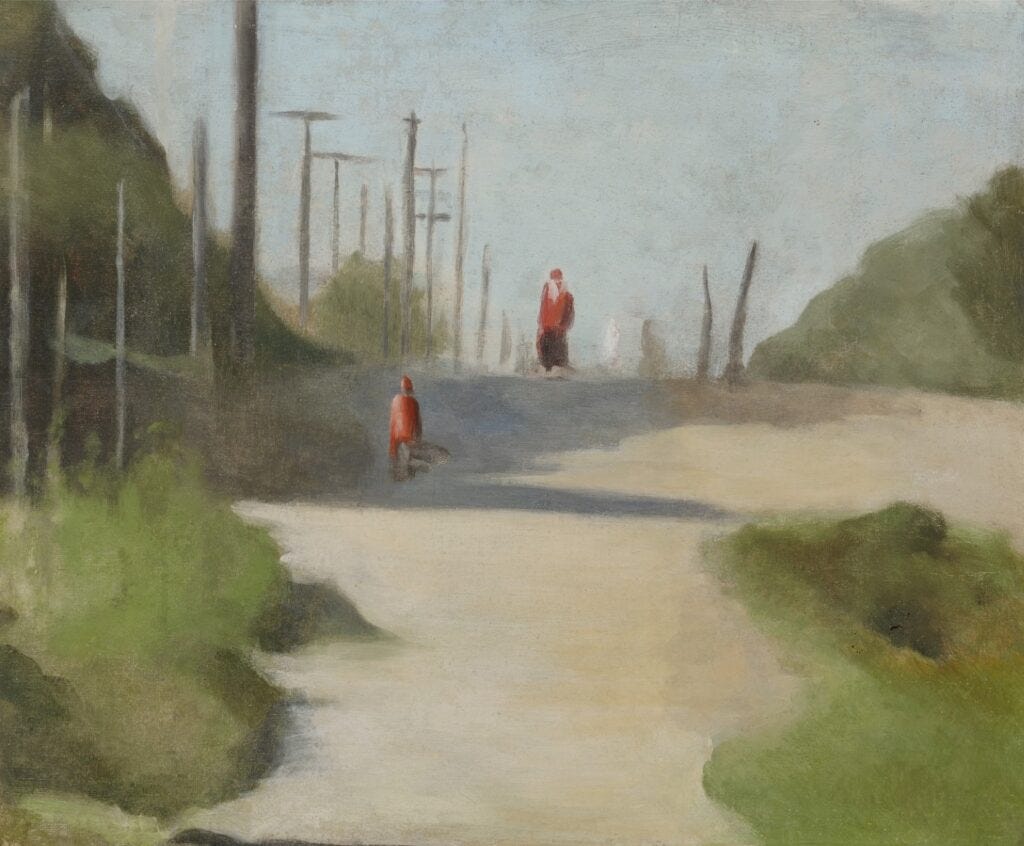
Clarice Beckett was one of Australia's most important early Modernist painters, excelling in portraiture, still-life and landscape. The discovery of a trove of her artworks has led to her remarkable talent and evocative art being recognised afresh and greatly admired.
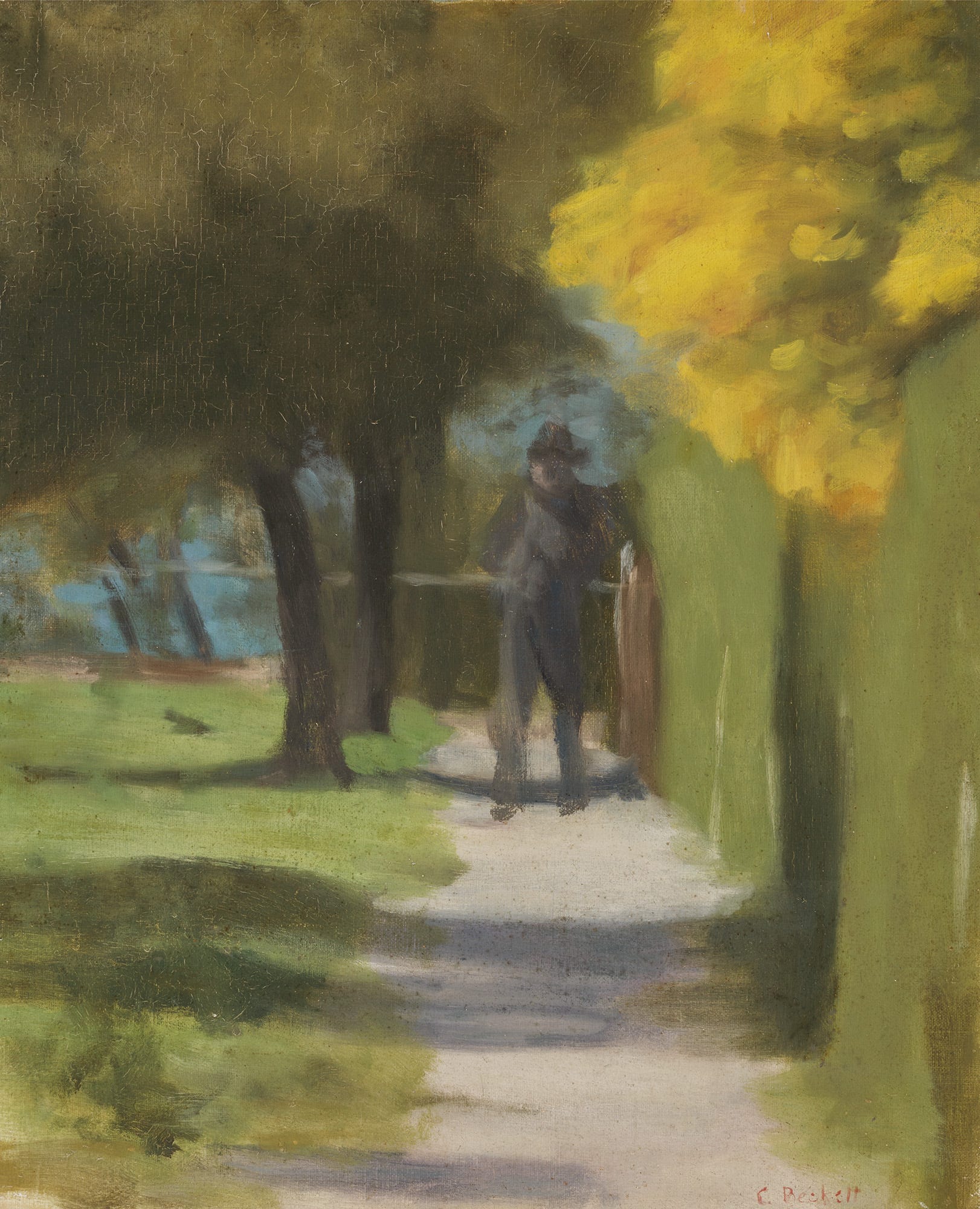
Clarice Marjoribanks Beckett (1887-1935), painter, was born on 21 March 1887 at Casterton, Victoria, daughter of Joseph Clifden Beckett, bank manager, and his wife Elizabeth Kate, née Brown. Her grandfather was John Brown, a Scottish master builder who had designed and built Como House and its gardens in Melbourne.
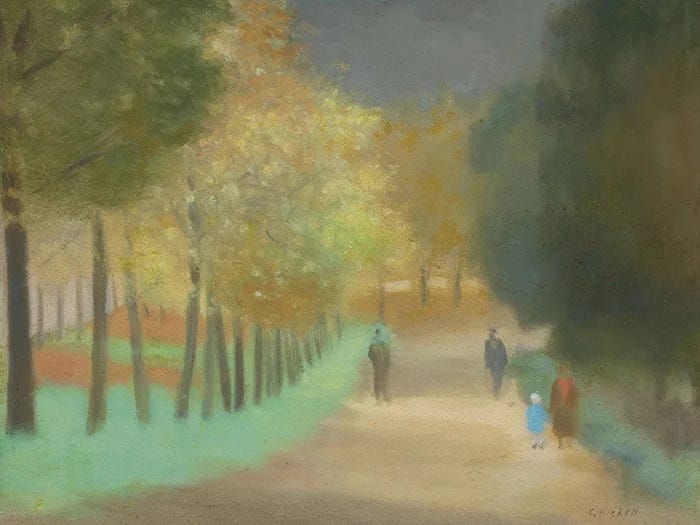
Clarice was a boarder at Queen’s College, Ballarat, until 1903, before spending a year at Melbourne Church of England Girls’ Grammar School. She showed artistic ability, and after leaving school took private lessons in charcoal drawing at Ballarat. As a genteel young lady she had her ‘coming out’ there and spent her spare time sketching, reading, listening to music and writing verse.
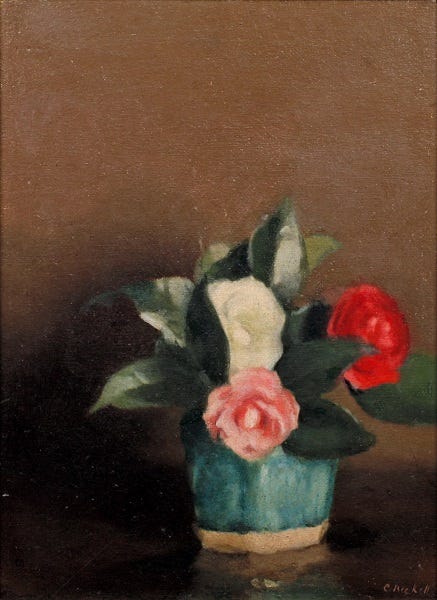
In 1914-16 she took lessons in drawing from Frederick McCubbin at the Melbourne Gallery School but then chose to study under Max Meldrum. Constantly encouraging, though often fiercely critical, Meldrum regarded Clarice as a very gifted artist; in later years he confided to one of her contemporaries his belief that he had helped to break the shell around her abnormally shy personality.
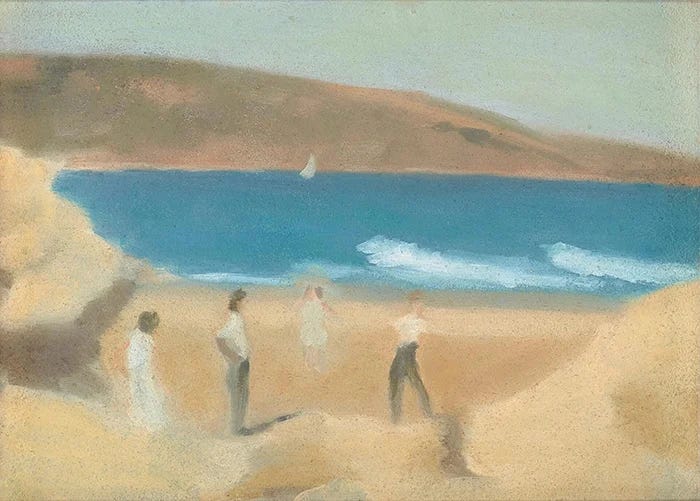
In 1918 Joseph Beckett retired and settled in the Melbourne bayside suburb of Beaumaris. Here Clarice spent the rest of her life as an artist. She took subject-matter from what would seem commonplace to others, such as a strip of wet tar-sealed road, bordered with telegraph poles. Her preferences were for the diffuse light of early morning; delicately restrained sunsets; dusk; misty days with a glimpse of a tram or T-model Ford; lights glowing in the fog. Whilst her contemporaries were revelling in the effects of broad sunlight, she was seeking to reinterpret her own restricted environment in subtle relationships of shape, colour and composition.
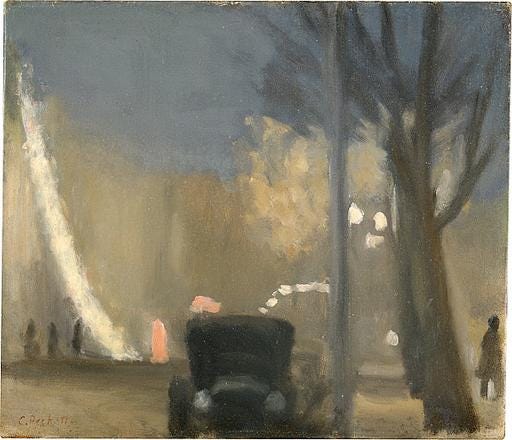
She painted swiftly and compulsively, never reworking and seldom signing her canvases. The brushwork was flat, the paint thinned and smoothed into the canvas. Her output was prolific: many boards were painted on both sides, sometimes with another canvas stuck on top of the first or second painting. She exhibited usually with Meldrum’s other students; very few of her paintings were sold in her lifetime. She regarded herself as a realist and remained loyal to Meldrum’s teachings, though not his literal practice; for years she would take her works for his appraisal, and most of her canvases bear his assessment, A, B or C, on the back.
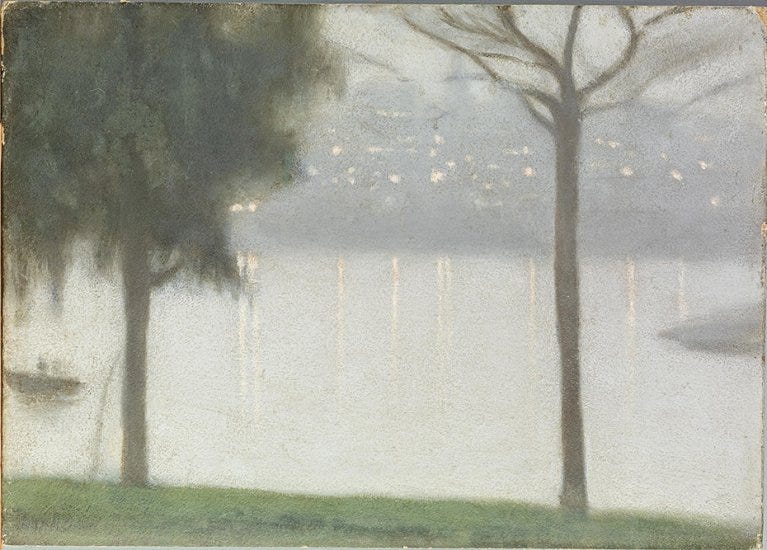
When in the late 1920s Clarice became more enmeshed in household duties and the nursing of frail parents, her painting time became limited, but she still managed to wander the cliffs of Beaumaris with her home-made cart filled with painting equipment. She quietly enjoyed summer camps at San Remo with a small gathering of Justus Jorgensen‘s students. In these last years her work flourished and developed; she used colour to reinforce form and there was a daring release of design. In 1934 her mother died: on 7 July next year Clarice, exhausted, died of pneumonia in a hospital at Sandringham. She was buried in the Cheltenham cemetery.
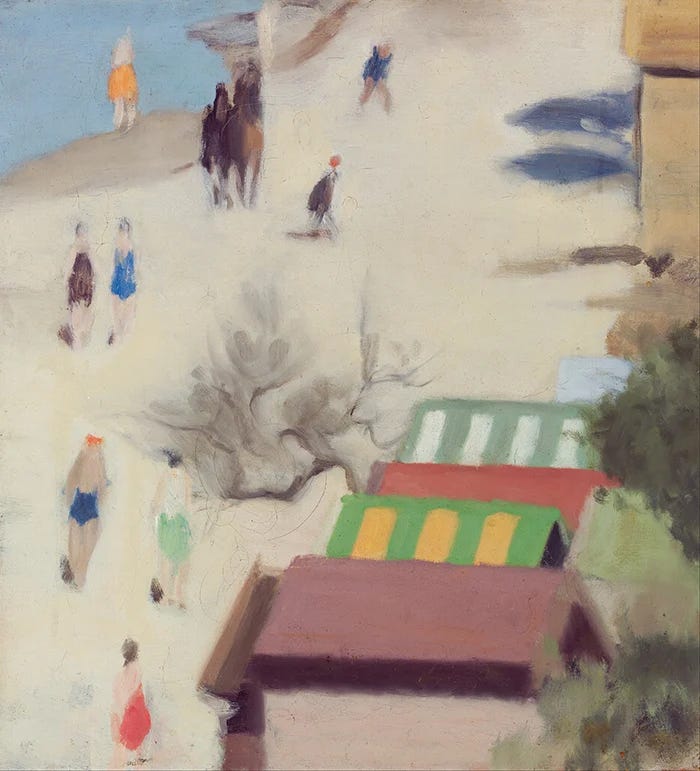
A memorial exhibition, assembled by her sister and father, was held at the Athenaeum Gallery in May 1936. In 1971 a major exhibition of her paintings was mounted at the Rosalind Humphries Galleries in Melbourne; a group of these was purchased for the National Gallery, Canberra.
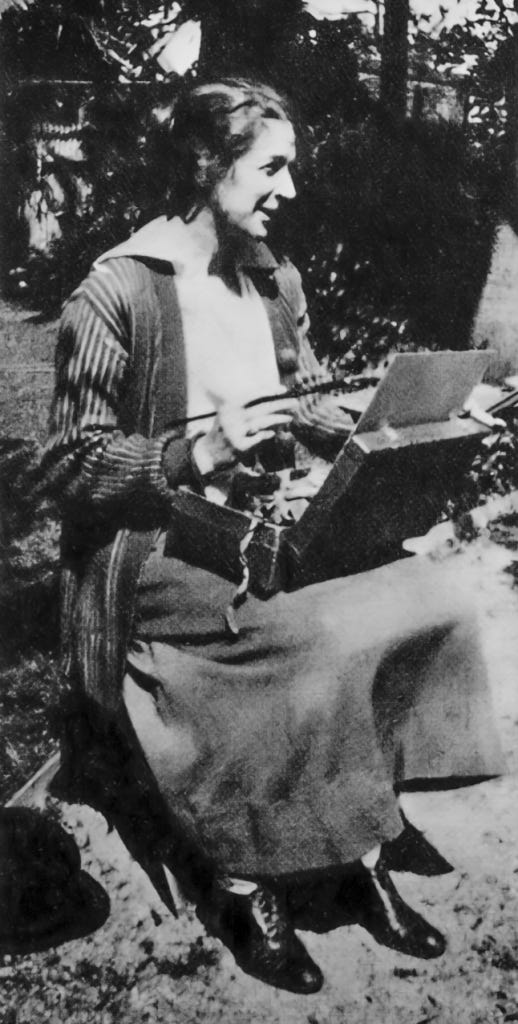
She made good use of her talent and time, even though she had a lot of family responsibilities and couldn’t leave home because of them. Somehow, she still found the energy and passion to create a great deal of beauty in her 45 years on the planet. Now SHE would have been a worthy subject of a novel, don’t you think?
I get a Jane Austen vibe off of her - quietly resourceful, practical and determined. I can’t wait to see her original work at the Melbourne museum.